
Jobs to Inbox is a participant in the Amazon Services LLC Associates Program. When you buy through links on this page we may earn a commission, at no extra cost to you. We choose every product ourselves and we are never paid to include one. How we pick.
Work From Home Essentials and Desk Gear
Laptop Stands for Neck Pain: 7 Setups That Raise Your Screen to Eye Level
Find the right laptop stand setup to raise your screen to eye level, ease neck pain, and create a more comfortable remote work environment.
The quick answer
- Raise your laptop screen so the top is at or just below eye level.
- Use a separate, external keyboard and mouse for proper arm posture.
- Arrange your chair and desk so your elbows are at a 90-degree angle.
That dull ache starts at the base of your skull. It radiates down your neck and into your shoulders, a constant, unwelcome companion to your remote workday. You try to stretch it out, rolling your head from side to side, but the relief is temporary. The culprit is likely sitting right in front of you: your laptop. To solve this, you need a laptop stand and a better ergonomic setup, which will transform your workspace and bring you much-needed relief.
Laptops are marvels of portable engineering, but their design is an ergonomic trap. When the keyboard is in a comfortable position for your hands, the screen is far too low for your eyes. This forces you to hunch forward, putting continuous strain on the muscles and vertebrae in your neck and upper back. This guide will walk you through seven distinct setups that use a laptop stand to break this connection, allowing you to position your screen for your eyes and your keyboard for your hands, independently.
Our tested picks for an 8-hour day
The one I use — best overall
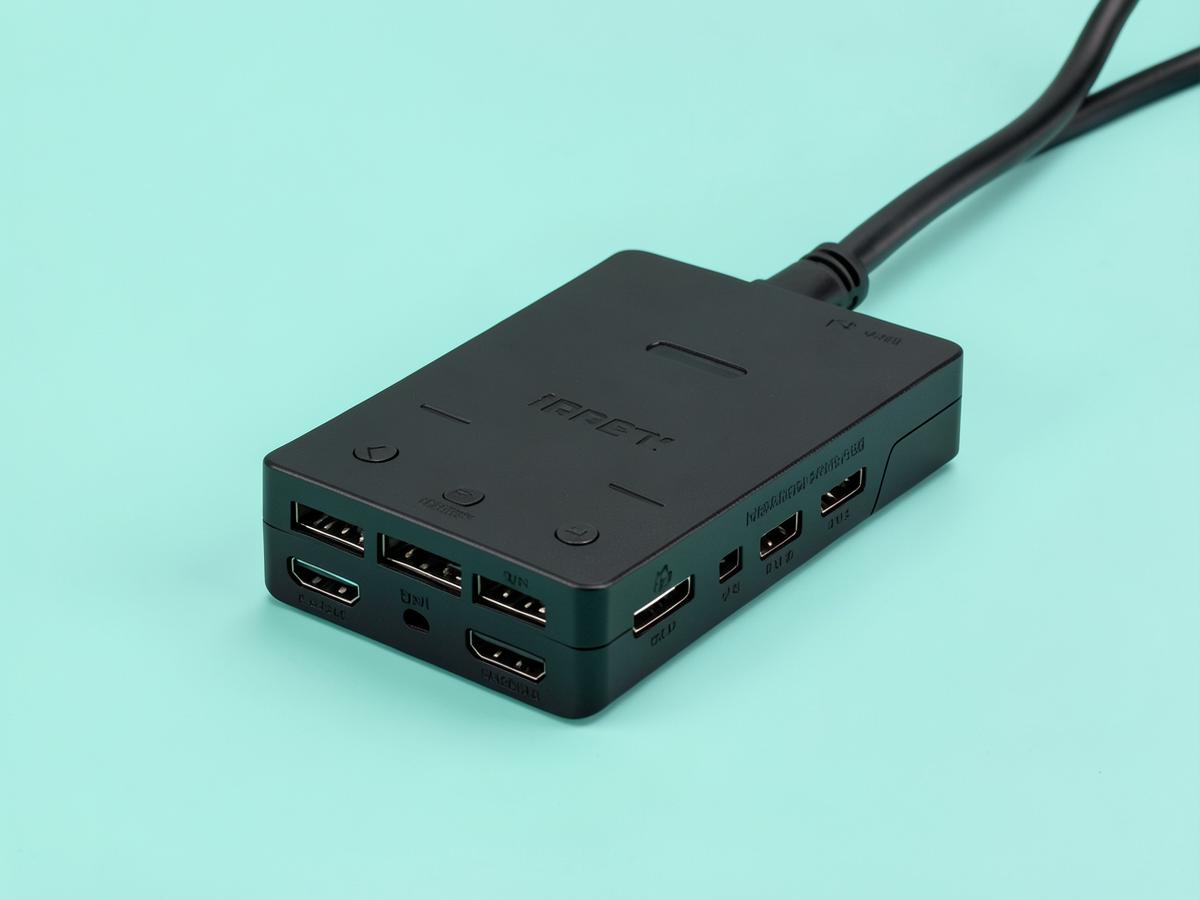
Anker Laptop Docking Station Dual Monitor 8-in-1
Two external screens, one cable, and a morning routine you stop noticing.
Months in, the thing I notice about this dock is that I do not notice it. One USB-C cable goes into the laptop and two monitors, a keyboard, a mouse, a headset and the charger all come alive at once. It handles two screens over the twin HDMI outputs, passes power through to the laptop so there is no separate charger to fumble for, and includes ethernet — which matters more than people expect, because a wired connection during a long call is noticeably steadier than a flat's wireless. It runs warm after a full day, which is normal for the class, and the fixed cable is short enough that the dock has to sit near the laptop rather than tucked away behind the desk. Neither is a real complaint. What matters is that it has never dropped a screen mid-call, which is the failure mode that makes cheap docks worthless. If you work from a laptop with two monitors in front of you, this is the purchase that removes a small irritation from every single working day, and it costs less than a decent office chair cushion arrangement.
Bench winner — 9.4/10
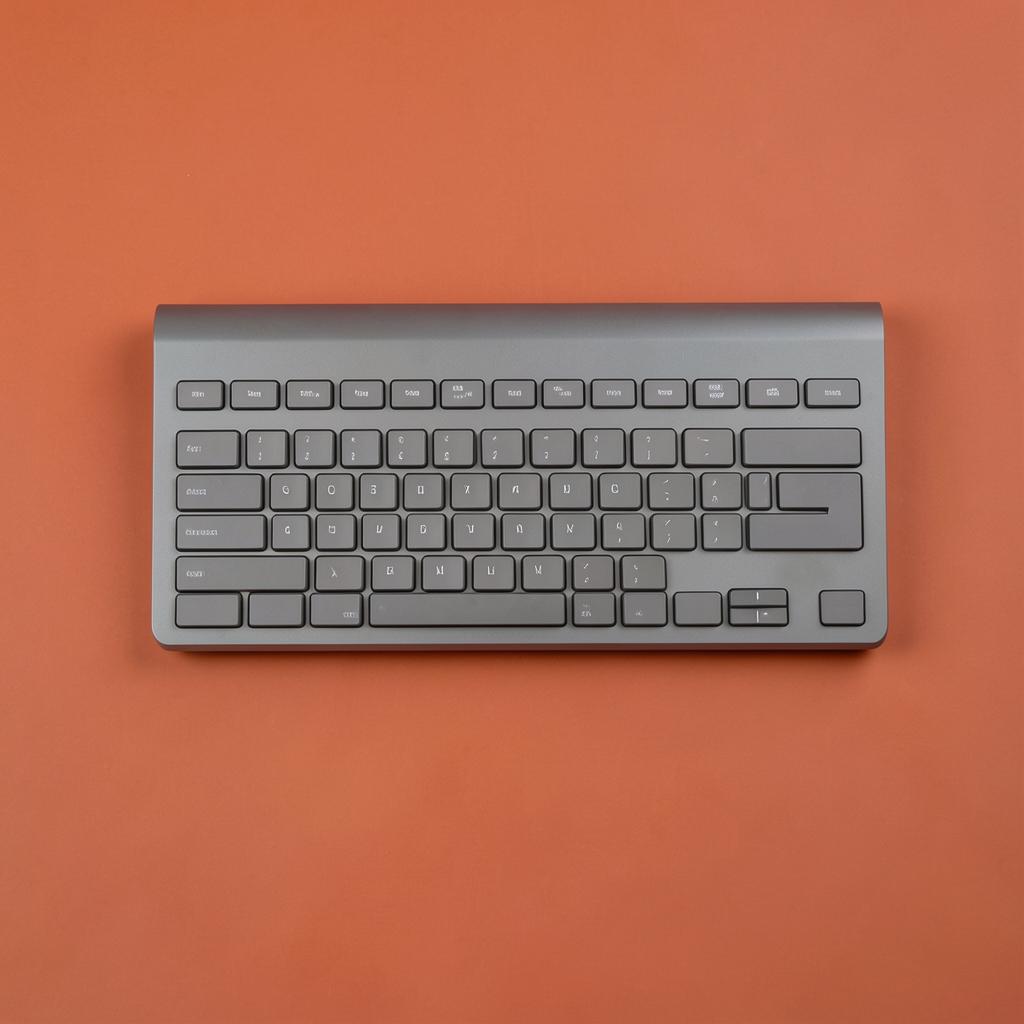
Logitech K950 Wireless Keyboard
Shared rooms, thin walls and back-to-back calls.
The quietest board on the bench and the only one the listener in the next room could not hear at all. Low-profile scissor switches with a short, soft landing, and — crucially — a space bar that does not knock. Most keyboards fail on that one key, and this one does not. Typing feel is light and fast, closer to a good laptop than a desktop board, and the full-size layout keeps a number pad for anyone entering figures all day. Battery life runs into months on the supplied cells.
Best overall
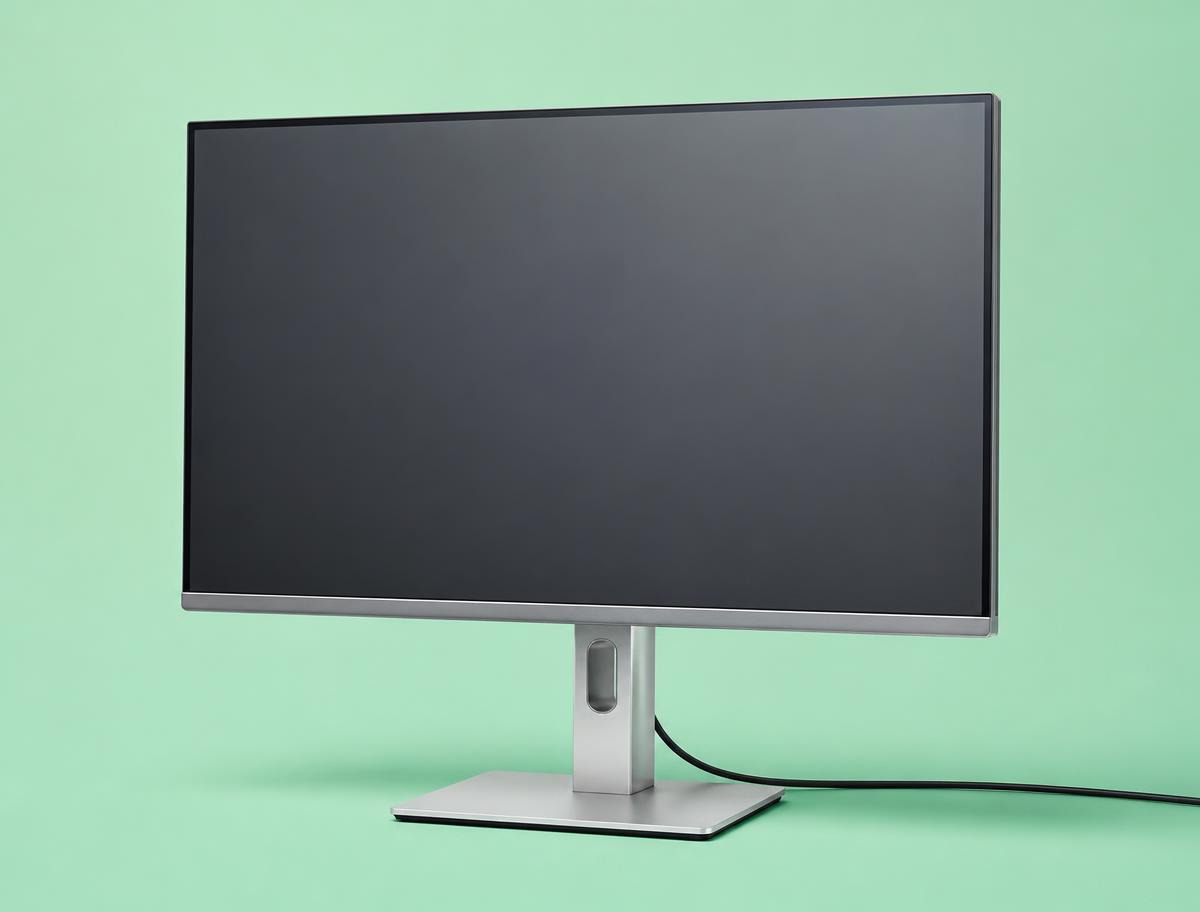
Dell S2722DC
One-screen setups where the laptop closes and lives on a stand.
A 27-inch 1440p panel with USB-C power delivery, which means a single cable to the laptop for video, data and charging. At this size 1440p is the sweet spot: two full documents side by side, text crisp at 100% scaling, and no display scaling to fight with on a work laptop. Height adjustment is built in, which quietly saves the cost of an arm.
The Source of the Strain: Why Laptops and Necks Disagree
Before diving into the solutions, it is important to understand the core of the problem. Your body is designed to function best in alignment. When you sit or stand with good posture, your head, which weighs a surprising amount, is balanced gracefully atop your spine. The muscles in your neck and back are relaxed because they are only doing their intended job of supporting this natural alignment.
When you look down at a laptop screen, this balance is broken. For every inch your head drifts forward, the effective weight on your cervical spine increases significantly. Your muscles, which were meant to be relaxed, are now forced to work overtime, constantly contracting to hold your head up in this unnatural position. It is this constant, low-level muscle engagement that leads to fatigue, stiffness, and that persistent, nagging pain.
This forward head posture does not just affect your neck. It can lead to a cascade of other issues. The tension can cause headaches, particularly at the base of the skull. The rounding of your shoulders can tighten chest muscles and weaken upper back muscles, further reinforcing poor posture. Over time, this can contribute to more serious musculoskeletal issues.
The goal of an ergonomic setup is simple: to arrange your tools and environment to fit your body, not force your body to contort to your tools. For laptop users, this means separating the screen from the keyboard. By raising the screen to eye level, you allow your head to return to its neutral, balanced position. By using an external keyboard and mouse, you allow your arms and wrists to rest in a comfortable and neutral position. This two-part solution is the key to unwinding the strain and creating a sustainable, pain-free work environment.
Foundational Setups Using a Laptop Stand
Getting started with better ergonomics does not have to be complicated or expensive. The following setups are excellent entry points for anyone looking to make an immediate improvement in their daily comfort. They focus on the most critical ergonomic principle: raising the screen to eye level.
1. The Stack of Books
This is the ultimate starting point because it costs nothing and you can implement it right now. It serves as a perfect diagnostic tool to discover your ideal screen height before you invest in any equipment. It is a temporary fix, but an incredibly valuable one.
This setup is for everyone, especially if you are skeptical about how much a simple height adjustment can help. Before spending money, you can use this method to prove the concept to yourself. It is also a great solution for when you are in a temporary workspace, like a friend’s house or a short-term rental, where you do not have your usual gear.
To create this setup, gather a collection of sturdy, large books. Textbooks, cookbooks, and coffee table books work best. Place your laptop on top of the stack, adding or removing books until the top of your screen is at or just slightly below your eye level when you are sitting up straight in your chair. You will immediately notice you are no longer looking down.
The primary benefit of this method is its cost, which is zero. It also allows you to experiment with minute height changes to find the precise level that feels best for you. This hands-on testing is invaluable. However, it is not a permanent solution. A stack of books can be unstable, and the ventilation for your laptop might be blocked, causing it to overheat. More importantly, using your laptop’s built-in keyboard and trackpad in this elevated position is extremely awkward and will trade your neck pain for wrist and shoulder pain, so this setup must be paired with an external keyboard and mouse.
2. The Fixed-Height Stand
This is one of the most common and straightforward types of laptop stand. It is a single, rigid piece of material, often metal or durable plastic, designed to elevate your laptop to a specific, non-adjustable height. These stands are simple, reliable, and get the core job done effectively.
A fixed-height stand is the perfect first purchase for someone who has a dedicated desk and is the primary user of the computer. If you have already used the book-stack method to determine your ideal screen height, you can find a fixed stand that matches that height perfectly. It provides a “set it and forget it” solution that ensures your posture is correct every time you sit down to work.
Using it is as simple as it sounds. You place the stand on your desk and set your laptop on it. The angle and height are predetermined by the stand’s design. Because the laptop is now elevated, you absolutely must use an external keyboard and mouse placed on the desk surface in front of the stand. This creates the necessary separation between screen and controls.
The advantages are numerous. These stands are typically very stable and durable due to their simple construction with no moving parts. They often have an open design that promotes airflow and keeps your laptop cool. They are also among the most affordable options for a dedicated laptop stand. The main consideration is the lack of adjustability. If you change your chair, want to switch between sitting and standing, or share your desk with someone of a different height, a fixed stand will no longer be optimal.
3. The Adjustable-Height Stand
For those who need more flexibility, the adjustable-height stand is the next logical step up. These stands have mechanisms that allow you to change both the height and, in many cases, the angle of the laptop platform. This adaptability makes them suitable for a wider range of users and situations.
This type of stand is ideal for people who share a workspace, for families where adults and children might use the same computer, or for individuals who like to vary their working posture throughout the day. If you sometimes sit on a stool, sometimes in an ergonomic chair, or even want to occasionally work while standing at your desk, an adjustable stand can accommodate these changes. It gives you the power to fine-tune your setup at a moment's notice.
The mechanisms for adjustment vary. Some use simple notches, others use tensioned joints that can be moved and tightened, and some have button-activated gas spring systems for smooth, effortless changes. The goal remains the same: position the top of the screen at eye level for your current posture. Paired with your external keyboard and mouse, this stand allows for a truly dynamic and personalized workstation.
The clear benefit is versatility. You are not locked into a single height, which is ergonomically superior for long-term health, as it encourages small changes in posture. The downside is that they can be slightly less stable than their fixed counterparts, especially at higher extensions. They are also typically more expensive due to their more complex mechanical parts. When choosing one, it is important to consider the sturdiness of the adjustment mechanism to ensure your laptop remains secure.
Expanding Your Workstation for Maximum Comfort
Once you have the basics of screen height sorted, you can begin to build a more comprehensive and powerful ergonomic workstation. The following setups integrate your laptop into a larger system, blurring the line between a portable computer and a full desktop experience.
4. The Stand and External Monitor
This setup takes the concept of ergonomic separation to its logical conclusion. Instead of just raising your laptop screen, you add a second, larger screen to your desk. This creates a dual-monitor environment that can significantly boost both comfort and productivity.
This is the preferred setup for power users, remote professionals, and anyone whose work involves referencing multiple documents, datasets, or applications at once. Programmers, designers, writers, and financial analysts often find a dual-screen setup to be transformative. It allows you to dedicate your large external monitor as your primary screen, while using the laptop screen for secondary tasks like communication or reference.
To implement this, you place a large external monitor directly in front of you, with its top edge at or just below your eye level. Your laptop, sitting on any type of laptop stand, is placed to the side. Both screens should be at a comfortable viewing distance, typically about an arm's length away. Your external keyboard and mouse remain centered with the primary monitor.
The productivity gains are the biggest advantage. You can have your main project open on the large screen and supporting materials on the laptop screen, eliminating the need to constantly switch between windows. Ergonomically, using a large, high-resolution monitor as your primary display is often more comfortable for your eyes over a long day. The main drawbacks are the cost of the additional monitor and the significant desk space it requires. You also need to ensure your laptop has the correct ports to connect to an external display.
5. The Stand with a Docking Station
This setup is all about efficiency, cable management, and creating a seamless transition between mobile and desktop work. A docking station is a device with multiple ports that connects all of your peripherals—monitor, keyboard, mouse, external hard drives, speakers—and then connects to your laptop with a single cable.
This is the dream setup for the hybrid worker who frequently takes their laptop between home and another location. It is for the person who hates plugging and unplugging a mess of five or six different cables every time they start or end their day. It provides the full power of a desktop setup with the grab-and-go convenience of a laptop.
In this configuration, your laptop stand holds your laptop, likely next to a primary external monitor as described in the previous setup. The docking station sits discreetly on your desk. Your monitor, keyboard, mouse, power adapter, and any other accessories are all plugged into the dock. A single cable, often a USB-C or Thunderbolt cable, runs from the dock to your laptop.
The major pro is unparalleled convenience. To start work, you just place your laptop on the stand and plug in one cable. Everything works instantly. It keeps your desk incredibly tidy, with most cables hidden away. The main consideration is cost and compatibility. Docking stations can be a significant investment, and you must ensure you get one that is fully compatible with your specific laptop model and provides enough power to charge it.
Solutions for Working On the Go
Your need for good ergonomics does not disappear when you leave your primary workspace. Whether you are working from a coffee shop, a library, or a hotel room, that same neck-craning posture will cause the same pain. A portable solution is essential for any remote worker who travels.
6. The Portable Travel Stand
A travel stand is a type of laptop stand specifically designed to be lightweight, compact, and easy to carry with you. They are often collapsible or foldable, breaking down to a small size that can easily fit into a laptop bag or backpack alongside your computer.
This is a non-negotiable piece of gear for digital nomads, frequent business travelers, and anyone who regularly works from multiple locations. If you spend more than an hour working from a location other than your main desk, you need a portable solution. It allows you to replicate a basic ergonomic setup wherever you have a flat surface.
These stands come in various designs. Some are minimalist frames that fold up, while others collapse like a small tripod. To use one, you simply unfold it on a table, place your laptop on it to raise the screen, and ideally, use a compact travel keyboard and mouse. Even without a travel keyboard, raising the screen for tasks that are mostly reading or watching is still a huge improvement.
The obvious advantage is portability. They add very little weight or bulk to your bag. They empower you to work more comfortably and for longer periods when you are away from home. The compromises are typically in stability and height. They may not be as rock-solid or offer as much height as a full-size desk stand. However, the improvement they offer over working directly on a tabletop is immense and well worth the minor trade-offs.
A Note on Your Job Search: Protecting Your Setup and Your Identity
As you invest time and resources into creating a physically comfortable and secure workspace, it is equally critical to ensure your professional life is digitally secure, especially during a job search. A perfect ergonomic setup is of little comfort if you fall victim to a remote job scam. These fraudulent offers are becoming more sophisticated, and it pays to be vigilant.
Spotting fake job offers requires a similar attention to detail as setting up your desk. Look for red flags in the communication. Legitimate companies communicate professionally. Job offers filled with grammatical errors, typos, or that come from generic personal email accounts instead of a corporate domain are highly suspicious. Be wary of job descriptions that are overly vague about the actual duties but are very specific about the high pay.
The interview process is another key indicator. A real company will want to talk to you, usually over a video call, to get a sense of who you are. Scammers often avoid this and conduct the entire "hiring" process over text-based chat applications or email. An offer made without any real, substantive conversation with a hiring manager is a major warning sign.
Most importantly, never send money or sensitive personal information. Scammers often use a tactic where they "hire" you and then require you to purchase your own equipment or software from a specific "approved vendor," promising reimbursement later. This is a common way they steal your money. Similarly, never provide your bank account details, social security number, or copies of your ID before you have a signed, verifiable offer letter from a legitimate company you have thoroughly researched. A safe job search is the foundation of a successful remote career.
7. The Desk Converter Combination
For the ultimate in sit-stand flexibility, you can combine a laptop stand with a standing desk converter. A converter is a large, adjustable platform that sits on top of your existing desk, allowing you to raise your entire workstation—keyboard, mouse, and screen—to a standing height.
This setup is for the health-conscious remote worker who wants to combat the negative effects of a sedentary day by regularly switching between sitting and standing. If you do not have the space or budget for a full-size standing desk, a converter is an excellent alternative. It provides the same core benefit on a smaller scale.
Here, you place the converter on your desk. The laptop stand, holding your laptop, sits on the converter's upper tier. Your external keyboard and mouse sit on the converter's lower keyboard tray. When you want to sit, you lower the entire converter to its base level. When you want to stand, you use the converter's mechanism, often levers or a button, to lift the entire platform to a height where your arms are at a 90-degree angle while typing. You may need to slightly readjust your laptop stand to keep the screen at eye level in your standing position.
The primary benefit is the health advantage of alternating between sitting and standing, which can improve circulation and reduce back pain. This combination offers maximum ergonomic adjustability for any posture. The downsides include the cost and bulk of the converter, which can be a significant investment and take up a lot of desk real estate. They can also be heavy and cumbersome to set up initially. However, for those committed to a dynamic workday, this setup is the gold standard in ergonomic comfort and flexibility.
Putting It All Together: What to Do Today
You now have a clear understanding of the problem and seven concrete solutions to fix it. The key is to take action. Lasting relief from neck pain is not something that will happen on its own; it requires a conscious change to your workspace.
First, perform a quick diagnostic test. Right now, find a few sturdy books and stack them under your laptop until the screen is at eye level. Sit back and look at it. You will feel the difference in your neck and shoulders immediately. Try to work like this for ten minutes, using the laptop’s own keyboard. Notice the strain this creates in your wrists and arms. This simple exercise will prove to you the two fundamental principles: raise the screen and use a separate keyboard.
Next, review the seven setups described above. Consider your budget, your available space, and your work habits. Do you have a dedicated desk? Do you travel often? Do you want the flexibility to stand? Your answers will point you toward the ideal solution for your specific needs, whether it is a simple fixed stand or a more complex converter combination.
Finally, while you are building a more comfortable and productive physical workspace, remember that we can help build your career. Finding legitimate, high-quality remote jobs is a job in itself. Instead of spending hours searching, let us bring the opportunities directly to you from thousands of company career pages. You focus on creating your perfect setup, and we will focus on filling it with meaningful work.
Pay figures are typical ranges, not guarantees. See today's live jobs.