Jobs to Inbox

Jobs to Inbox is a participant in the Amazon Services LLC Associates Program. When you buy through links on this page we may earn a commission, at no extra cost to you. We choose every product ourselves and we are never paid to include one. How we pick.

Buying guide

The Small-Space Desk Board: Six Desks, Three Kinds of Room

Bedroom corners, shared dining rooms and hallway alcoves each need a different desk. Here are six that work, sorted by the room you actually have.

By Priya Raman · Reviewed September 10, 2026

In a genuinely tight corner, the FEZIBO 32-inch electric standing desk is the smallest thing we would still call a real desk. In a shared room the furtble 53-inch desk looks domestic and costs very little, and if your table has to stay where it is, the FLEXISPOT 28-inch converter gets you standing without buying furniture at all.

Most people working from home are not working in an office. They are working in a bedroom corner, an alcove at the end of a hallway, or a section of a dining room that has to look like a dining room again by six o'clock. That single constraint rules out most of the furniture sold as home office desks, because almost all of it assumes a dedicated room with a spare wall and nobody else in it.

So this guide is not a ranking. Ranking desks against each other is close to useless when the winner depends entirely on the shape of your room. Instead the six desks below are sorted into three bands: the smallest footprints that still work, desks that have to pass as furniture in a shared room, and ways to get a sit-stand desk when you do not have a room to give up. Find your band, read the two picks in it, and ignore the rest.

Before you read any further, measure. Width of the wall, depth from the wall to the nearest thing you would walk into, and the distance the chair needs to roll back — about two feet for most people. Write those three numbers down. A desk that fits the wall but not the chair is a desk you will resent by the second week, and the returns process for large furniture is the worst one in retail.

One more number decides more than people expect: the rear lip. If the back edge of the desk is not a flat, solid strip about three quarters of an inch thick, a monitor arm cannot clamp to it. Without an arm, the monitor stand sits on the desk and eats four to six inches of the depth you were protecting. On a shallow desk that is the difference between comfortable and cramped, so we call it out on every pick.

Band 1

Under three feet of wall

This is the alcove, the closet conversion, the gap between a wardrobe and a window. You have somewhere between 30 and 42 inches of usable width and probably under 24 inches of depth. The trap here is buying a small desk that is also a flimsy desk — at this size, stability and a usable rear edge matter more than any feature on the box.

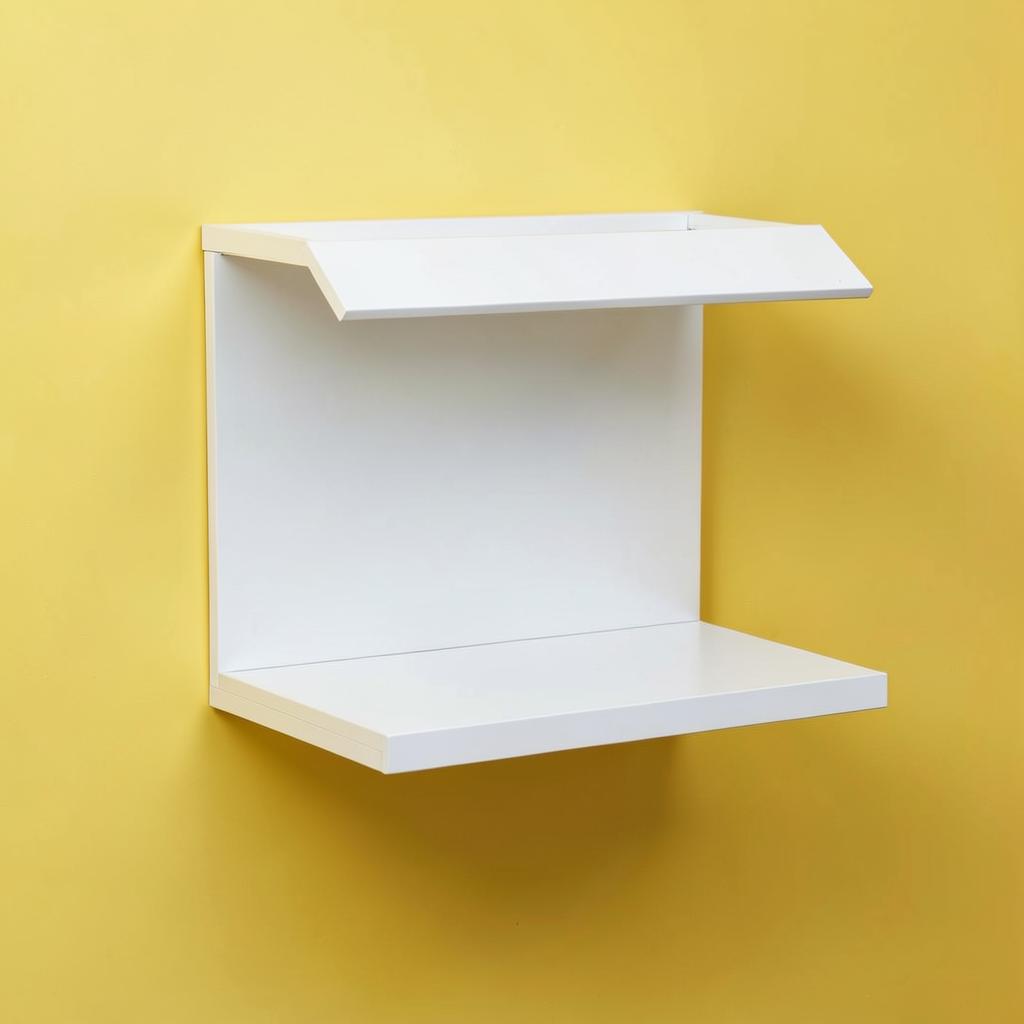
Prepac Floating Desk

Smallest real footprint

Prepac Floating Desk

Hallways and rooms where nothing can touch the floor.

Mounted into studs, this gives you a working surface with no legs to walk into and a clear floor underneath, which visually gives a small room back to you. There is a drop-down section that hides pens, cables and a notebook, so the wall looks tidy when you stop for the day. The trade-offs are real: you are drilling into a wall, the height is fixed at whatever you mount it at, and the weight limit suits a laptop, a light monitor and a lamp rather than two big screens.

Width
42 in
Depth
20 in
Height
Fixed at mount
Arm clamp
Not recommended

What's good

  • No floor footprint at all
  • Hides clutter behind the drop-down door
  • One of the cheapest desks here

What's not

  • Must be screwed into studs
  • Height is fixed once mounted
  • Not built for heavy monitors
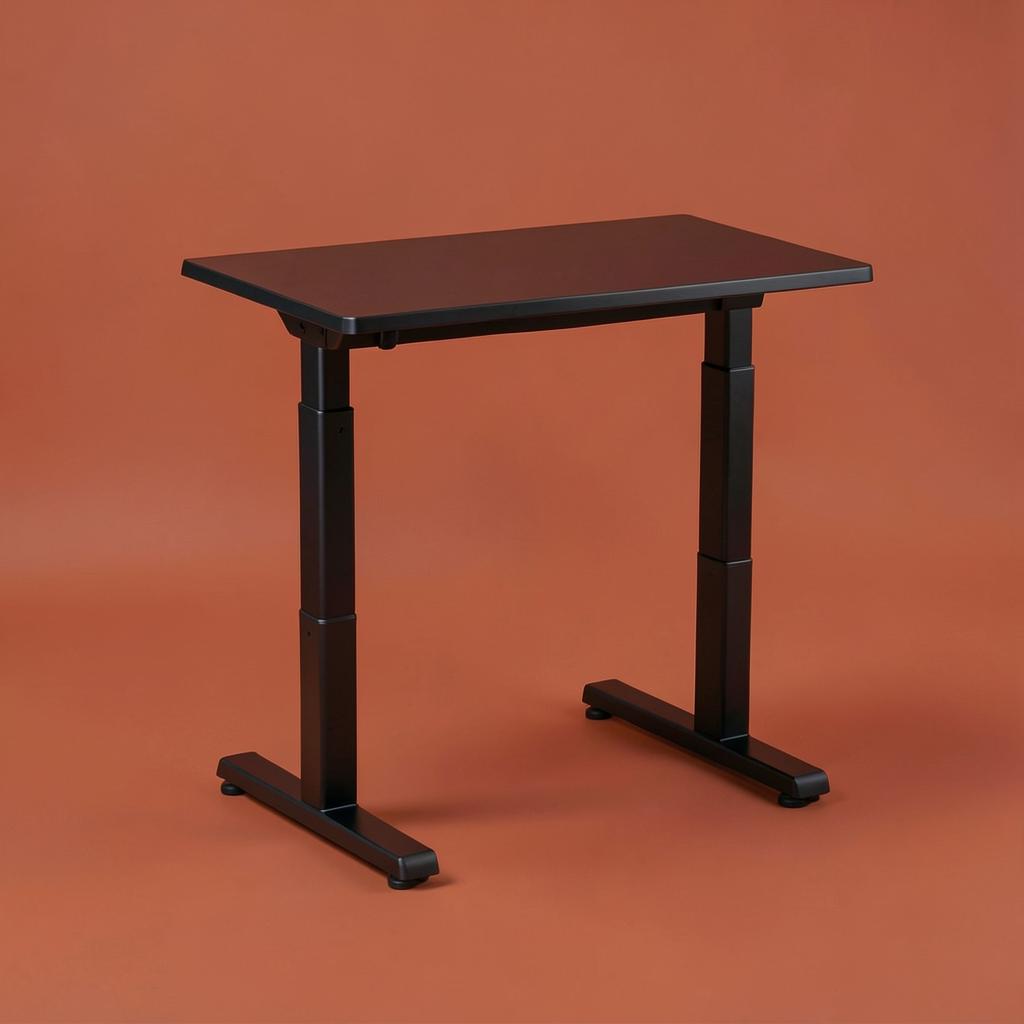
FEZIBO 32" Electric Standing Desk

Smallest sit-stand desk

FEZIBO 32" Electric Standing Desk

An alcove or narrow wall that still needs to raise and lower.

Thirty-two inches wide is the smallest motorised desk we would recommend to anyone working a full shift, and it is genuinely surprising how much fits on it once the monitor is on an arm. The motor is quiet enough for a bedroom and the height range covers most people sitting and standing. Expect a little flex at the top of the range — this is a single-column desk, so treat standing as a change of position for part of the day rather than something you do while typing fast for three hours.

Width
32 in
Depth
About 20 in
Sit-stand
Electric, single motor
Arm clamp
Yes

What's good

  • Fits a wall under three feet
  • Motorised height, quiet motor
  • Rear edge takes a monitor arm

What's not

  • Some flex at full standing height
  • Small surface once a laptop is on it
Band 2

A room other people live in

A bedroom, a dining room, a corner of the living room. The desk has to hold a full working day and then stop looking like an office when you close the laptop. That means finishes that read as furniture, cable routing that hides the mess, and drawers, because visible paperwork is what makes a shared room feel like work never ends.

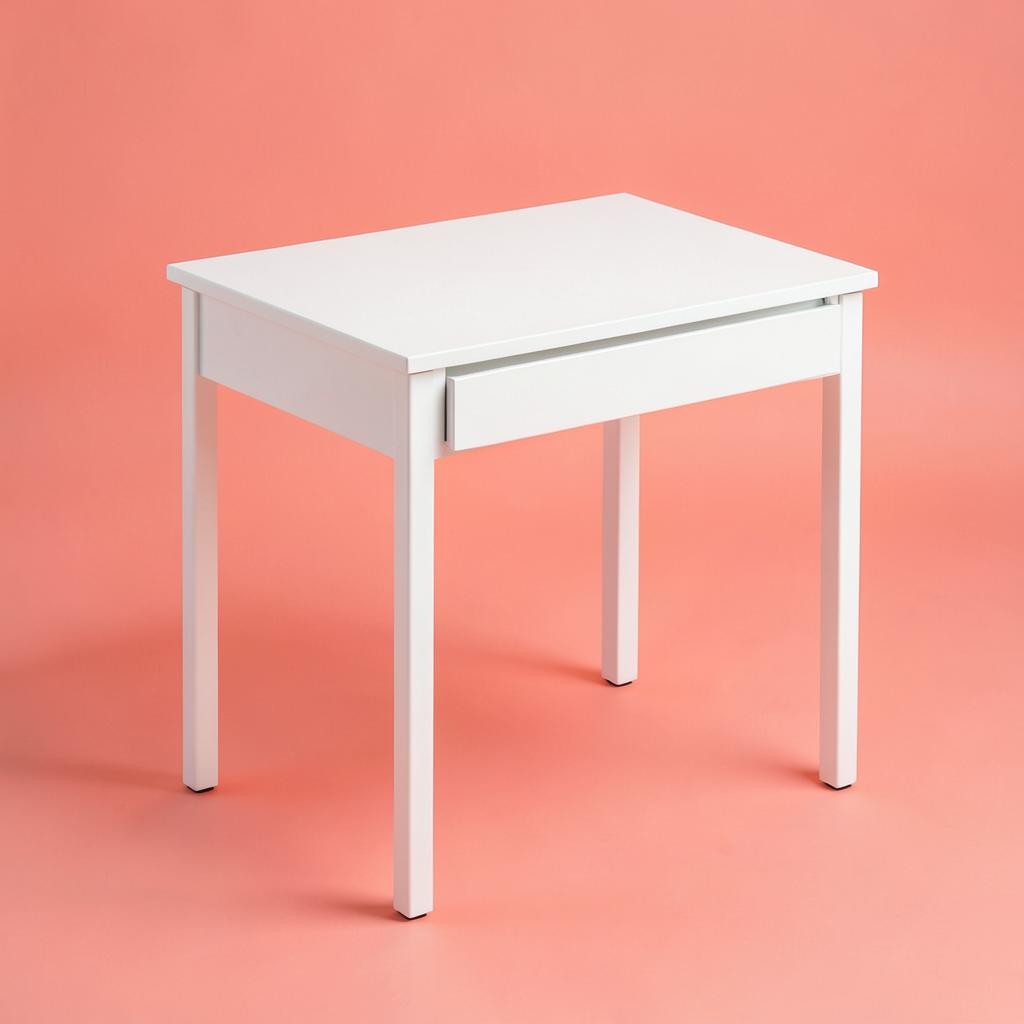
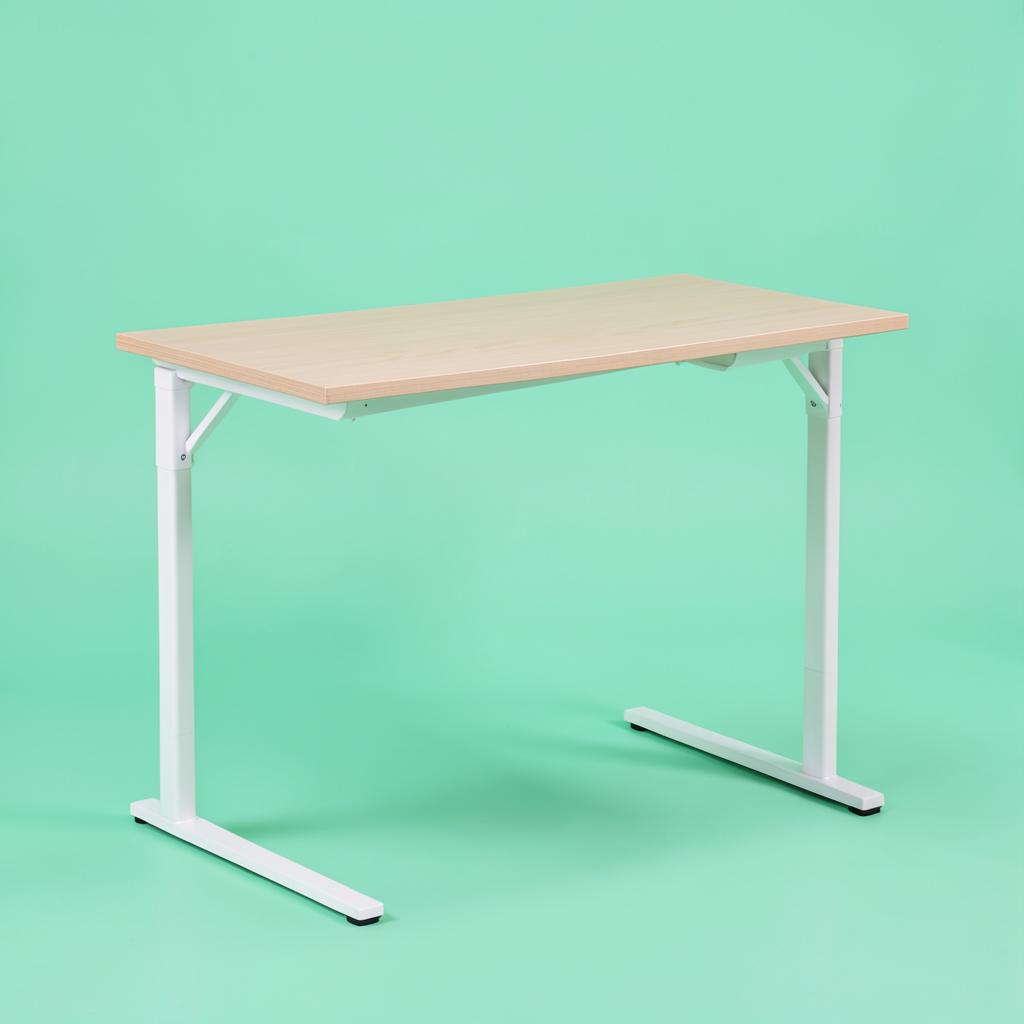
furtble 53" Desk with Drawers

Best value in a shared room

furtble 53" Desk with Drawers

A bedroom or dining room where the desk has to look like furniture.

It is a plain white desk with fabric drawers and that is exactly the point — in a bedroom it reads as a dressing table, not as a workstation, and the drawers swallow the paperwork that otherwise sits out reminding you about work at nine at night. At 53 inches you get room for a monitor and a notebook side by side, which the tiny desks cannot give you. The top is engineered board, so use a wide-footed monitor stand or a backing plate if you clamp an arm to it.

Width
53 in
Depth
About 24 in
Storage
Drawers included
Arm clamp
With a backing plate

What's good

  • Very inexpensive for the size
  • Drawers hide the paperwork
  • Reads as bedroom furniture, not office kit

What's not

  • Engineered board top, so clamp with care
  • Fixed height
  • Assembly takes about an hour
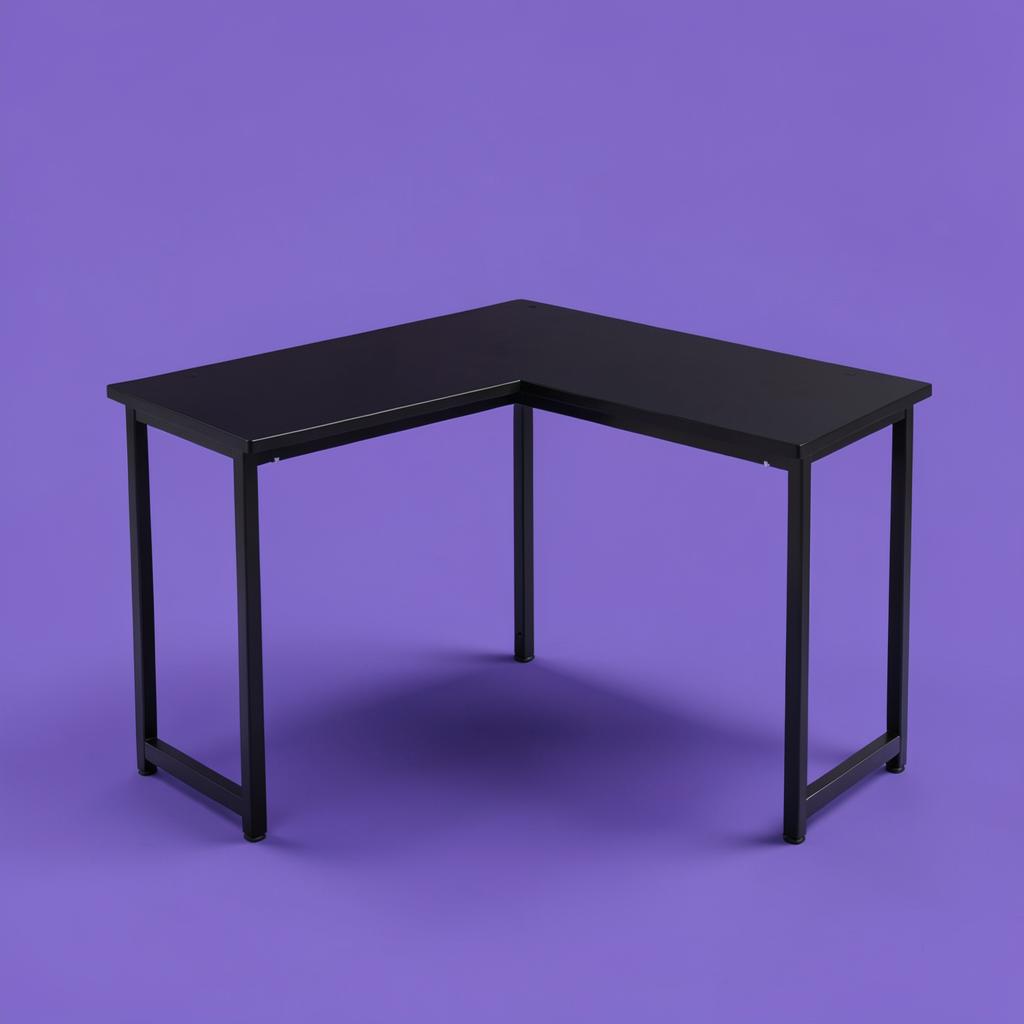
SHW Mission 55 x 60 L-Shaped Desk

Best use of a corner

SHW Mission 55 x 60 L-Shaped Desk

A spare-room corner that has to hold two screens and paperwork.

An L shape uses the corner that every other desk wastes, and the second wing is where the paper, the phone and the coffee live so the main surface stays clear. The desktop is reversible, so the long side can face either wall, which matters when the only outlet is on one side of the room. It is particleboard on a steel frame — it will not survive three house moves, but with the cross braces tightened properly it is steady enough to lean on, and it costs a fraction of what corner desks usually run.

Shape
L-shaped
Footprint
55 x 60 in
Height
Fixed
Assembly
About 45 minutes

What's good

  • Two work surfaces for the price of one desk
  • Reversible, so it fits either corner
  • Steel frame keeps it steady

What's not

  • Particleboard top
  • Fixed height
  • Needs a real corner, not a wall
Band 3

Standing up without a spare room

Sit-stand is the one upgrade people ask about most and use least. Both picks here are honest routes to it in a small space: one puts a lift on the table you already own, the other replaces the desk with a small motorised one. Read the section further down on whether you will actually use it before you spend anything.

FLEXISPOT 28" Standing Desk Converter

Best if the table has to stay

FLEXISPOT 28" Standing Desk Converter

Renters, shared tables, and anyone who cannot replace the furniture.

A converter sits on the desk or dining table you already own and lifts the monitor and keyboard together, which solves the standing problem without new furniture and without a landlord conversation. The 28-inch version is the one to get in a small room; the wider models look reasonable in a showroom and swallow a dining table at home. It occupies its depth permanently, so measure before you order, and lift it with two hands — it is heavier than it looks.

Width
28 in
Lift
Gas spring
Fits
Existing desk or table
Assembly
None

What's good

  • No new furniture and nothing to assemble
  • Lifts screen and keyboard together, so the height stays right
  • Moves house in the back of a car

What's not

  • Takes up desk depth all the time
  • Heavy to reposition
  • Adds visual bulk
Branch Duo Standing Desk

The one to stretch for

Branch Duo Standing Desk

A dedicated corner where a sit-stand desk will get daily use.

This is the priciest desk on the page and the only one we would call properly solid at standing height, which is the specification budget sit-stand desks quietly fail. The rear edge takes a monitor arm with no adapter, the cable tray is included rather than sold separately, and the finishes look like furniture rather than a gaming rig. Buy it if you already know you stand during the day; if you are still guessing, start with the converter above and spend this money on your chair.

Adjust range
About 20 in
Sit-stand
Electric
Arm clamp
Yes
Assembly
Two people is easier

What's good

  • Genuinely steady when raised
  • Takes a monitor arm without an adapter
  • Cable management included

What's not

  • Costs several times what the small desks cost
  • Heavy
  • Limited finishes

How we picked

  • Real footprint measured at the widest point, not the tabletop size
  • A solid rear lip that takes a monitor arm clamp, called out on every pick
  • Cable routing that exists, so the desk can sit away from an outlet
  • Steady at full height if it raises — wobble at standing height ruins a sit-stand desk
  • Assembly one person can finish alone in an evening
  • Prices that suit someone kitting out a home office on a normal paycheck

The three measurements that decide everything

Depth is the one people get wrong. A desk deeper than 24 inches will block the walkway in most bedroom corners; a desk shallower than 20 inches puts a monitor closer to your face than your eyes want for eight hours. Twenty to twenty-four inches is the working band, and within it a monitor arm buys back the four inches a monitor stand would take. That is why the rear lip keeps coming up.

Width sets how much you can have open at once. Under 36 inches you have a laptop or a monitor, not both side by side, and paperwork lives somewhere else. Between 40 and 48 inches a monitor and a notebook coexist comfortably. Past 53 inches you are into two-screen territory, and in a shared room that starts to dominate.

Chair clearance is the number nobody measures. A desk chair needs roughly 24 to 30 inches behind it to roll back and stand up without hitting a bed or a wall. Measure it with the chair you own, not the chair you imagine, and check the swing of the door while you are there. Plenty of small-room desk setups fail on the door, not the desk.

Will you actually use a sit-stand desk?

Be honest about this one, because the motor is most of the price. The people who genuinely stand for part of the day almost all tie it to a specific task rather than to willpower — standing for phone calls and sitting for documentation, or standing for the first hour after lunch when everyone gets sleepy. Without a trigger like that the desk quietly stays down and you have paid several hundred dollars for a height you set once.

There is also a middle route people forget. If you already own a table you like, a converter costs a fraction of a motorised desk and can be sold on in a week if standing turns out not to suit you. That is a much cheaper way to find out than replacing your furniture and discovering the same thing.

If you do buy a sit-stand desk, set the standing height properly on day one: elbows at about ninety degrees, monitor top roughly at eyebrow level, and a mat under your feet. Standing badly for four hours is worse for you than sitting well, and most people who give up on standing gave up because their setup was wrong rather than because standing does not work.

Making a cheap desk feel like an expensive one

Three inexpensive additions do more than upgrading the desk itself. A monitor arm gets the screen off the surface, sets the height correctly and hands back a chunk of depth. A cable tray or even a strip of adhesive clips under the rear edge stops the tangle that makes a small desk look chaotic. And felt pads under anything that slides protect a soft top from the scratches that make a cheap desk look cheap within a year.

If the top flexes when you lean on it, the usual cause is a loose cross brace rather than a weak top. Take ten minutes and retighten everything in a cross pattern after the first week, the same way you would with a bike wheel. Flat-pack furniture settles, and almost every wobble complaint we have chased down was a bolt that had backed off.

For an engineered-board top that you want to clamp a monitor arm to, a five-dollar steel backing plate under the clamp spreads the load and stops the dent that eventually turns into a crack. It is the cheapest insurance on this page.

Where the desk should sit in the room

Never put the desk directly facing a window if you spend time on camera. The window becomes a backlight, the camera exposes for it, and your face turns into a shadow. Sideways to a window is the best position in almost every room: you get daylight on your face and no glare on the screen.

Keep the monitor out of the direct path of an overhead light too. If you tilt the screen back and see a ceiling light reflected in it, so does your neck all day, because you will subtly duck to avoid it. Turning the desk ninety degrees usually fixes what an expensive anti-glare screen cannot.

In a bedroom, angle matters for a different reason. A desk that faces the bed makes it very hard to stop working, and a desk you can see from the bed makes it hard to stop thinking about work. If the room allows it, face a wall or a window and put the bed behind you.

Questions we get

Can I just use a dining table?

For a few weeks, yes. Long term the height is the problem: dining tables run about 30 inches, which is two to three inches taller than a desk, so your shoulders creep up all day. If the table has to stay, raise the chair, add a footrest and put the monitor on an arm — that fixes the geometry for a lot less than new furniture.

Is a corner desk better than a straight one?

Only if you have a real corner to give it. An L-shaped desk in a room where it has to sit against one wall wastes more space than it saves. In an actual corner it is the most efficient shape there is, because it uses the part of the room nothing else can use.

How much should I spend on a desk?

Less than you think, and less than you spend on the chair. A steady surface at the right height with the monitor raised properly beats an expensive desk paired with a dining chair every single time. If the budget is fixed, buy the cheap desk and the better chair.

Do I need a desk with drawers?

In a shared room, yes — more than you would guess. Paperwork and cables left in view are what make a bedroom feel like an office at bedtime. A drawer or two, or even a lidded box under the desk, changes how the room feels at the end of the day.

Will a monitor arm work on any of these?

Check the rear lip. The FEZIBO and the Branch take a clamp directly. The furtble and the SHW will take one with a steel backing plate to spread the load. The Prepac floating desk and most converters are not built for it, so plan on a stand there instead.

Before you buy

The desk is the piece people overspend on and get the least back from. Once the surface is steady and the height is right, the desk has done nearly everything it can do for you — the rest of your comfort comes from the chair, the monitor height and the light in the room. That is why our advice in a tight budget is always the same: cheap steady desk, better chair, monitor on an arm.

If you are torn between two of these, pick the one that suits the room you are in this year rather than the office you hope to have later. A desk that fits the corner you actually work in gets used every day. A desk bought for a future spare room sits in a hallway annoying everyone, and neither of you gets any work done.

Keep reading

As an Amazon Associate we earn from qualifying purchases. Product availability and prices on Amazon change frequently and anything shown here may be out of date by the time you click. How we pick our recommendations.