Jobs to Inbox

Jobs to Inbox is a participant in the Amazon Services LLC Associates Program. When you buy through links on this page we may earn a commission, at no extra cost to you. We choose every product ourselves and we are never paid to include one. How we pick.

Swap sheet

Six Cheap Swaps For The Ergonomic Gear You Cannot Afford

A proper ergonomic chair costs more than most people will ever spend. These six small buys fix the same problems for a fraction of it.

By Terrence Blake · Reviewed September 10, 2026

Instead of a sit-stand desk

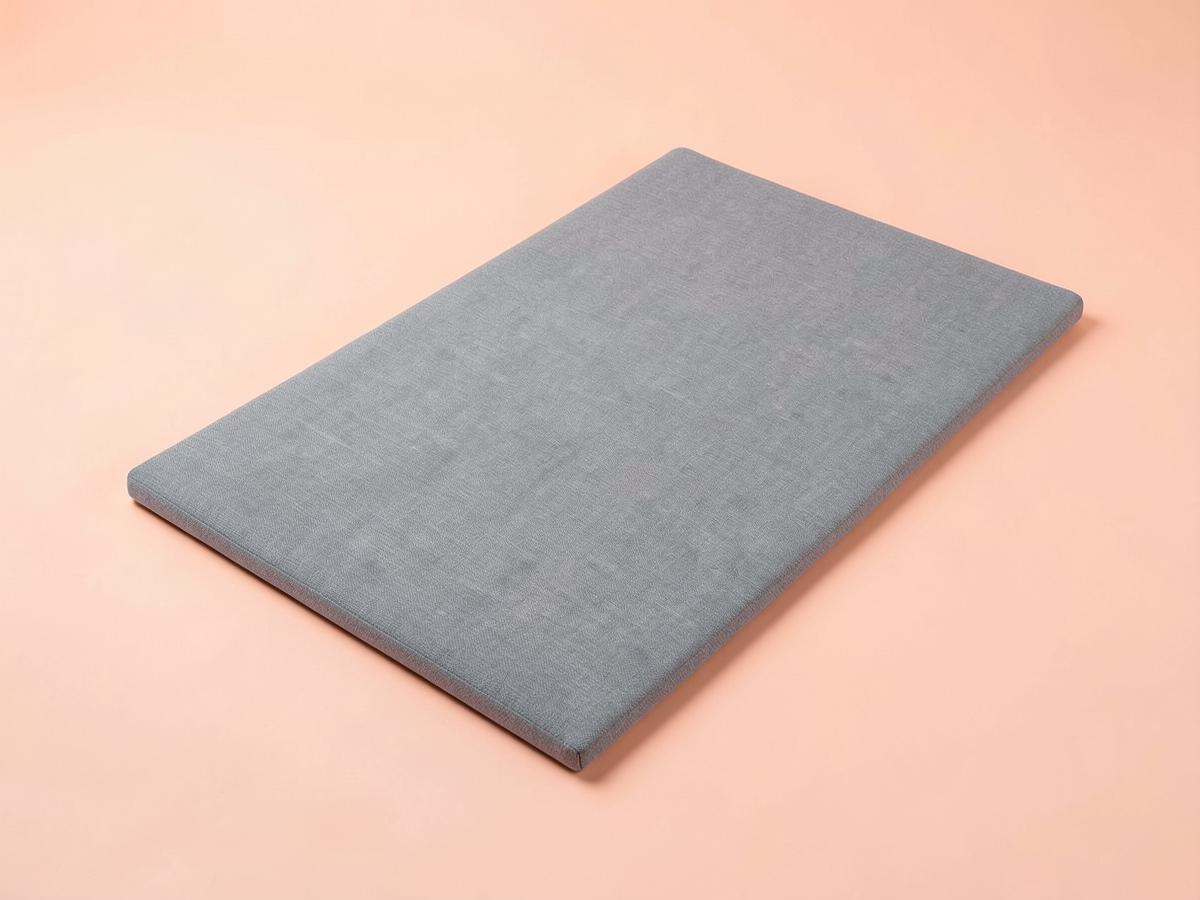
ComfiLife Anti Fatigue Floor Mat

Instead of a taller chair

ComfiLife Foot Rest Under Desk

Instead of a chair with lumbar adjustment

Everlasting Comfort Lumbar Support Pillow

The honest position on ergonomic furniture is that the expensive stuff is genuinely good and almost nobody working from a spare bedroom is going to buy it. A well-known mesh task chair costs more than most people's first car repair. A powered sit-stand desk costs more than the desk, the monitor and the laptop stand put together. Telling somebody with back pain to spend fifteen hundred dollars is not advice, it is a shrug.

So this page takes the other route. Every problem an expensive chair solves — feet unsupported, lower back unsupported, sitting bones taking the whole load, standing on a hard floor — can be improved substantially by a small purchase costing between twenty and fifty dollars. Not solved as completely, and not as elegantly. But improved by enough that hour nine feels different, which is the only outcome that actually matters.

Each entry below is framed as a swap: the expensive thing, the cheap thing that does most of the same job, and an honest account of what you give up. Nothing here is a miracle, and if you have a serious back problem, none of it replaces a proper assessment. What it does is get a badly set-up desk to something reasonable for less than the cost of one month of a chair payment plan.

One thing to get right before you buy anything: work out which problem you actually have. Feet dangling and lower back arching are different complaints with different answers, and buying all six at once is how you end up with a drawer full of foam. Read the swap that matches your symptom, buy that one, and give it two weeks.

If you buy one thing, make it the footrest — a desk that is too tall for you is the most common problem in home working and the cheapest to fix. If you buy two, add the lumbar pillow. Together they cost a small fraction of a chair and fix most of what a chair would have fixed.

The swap sheet

ComfiLife Anti Fatigue Floor Mat
01Instead of a sit-stand desk

ComfiLife Anti Fatigue Floor Mat

Anyone who stands to work and quits after an hour because their feet hurt

The reason most people abandon standing is not their back, it is their feet, and a three-quarter-inch cushioned mat fixes that for roughly the price of a takeaway for two. The foam here is dense enough that it does not flatten permanently after a month, which is where the very cheap mats fail, and the bevelled edges do not curl up and trip you. Stand on a hard floor for two hours and your heels ache; stand on this and you stop thinking about your feet, which is exactly the point. It also works in a kitchen, which is worth knowing if the standing experiment does not stick.

Thickness
3/4 in
Surface
Non-slip
Use
Desk or kitchen
Give up
Nothing much

What's good

  • Thick enough to actually change how standing feels
  • Foam holds up rather than flattening
  • Bevelled edges you will not trip on

What's not

  • Rolls up in transit and takes days to lie flat
  • Slides slightly on hard floor
ComfiLife Foot Rest Under Desk
02Instead of a taller chair

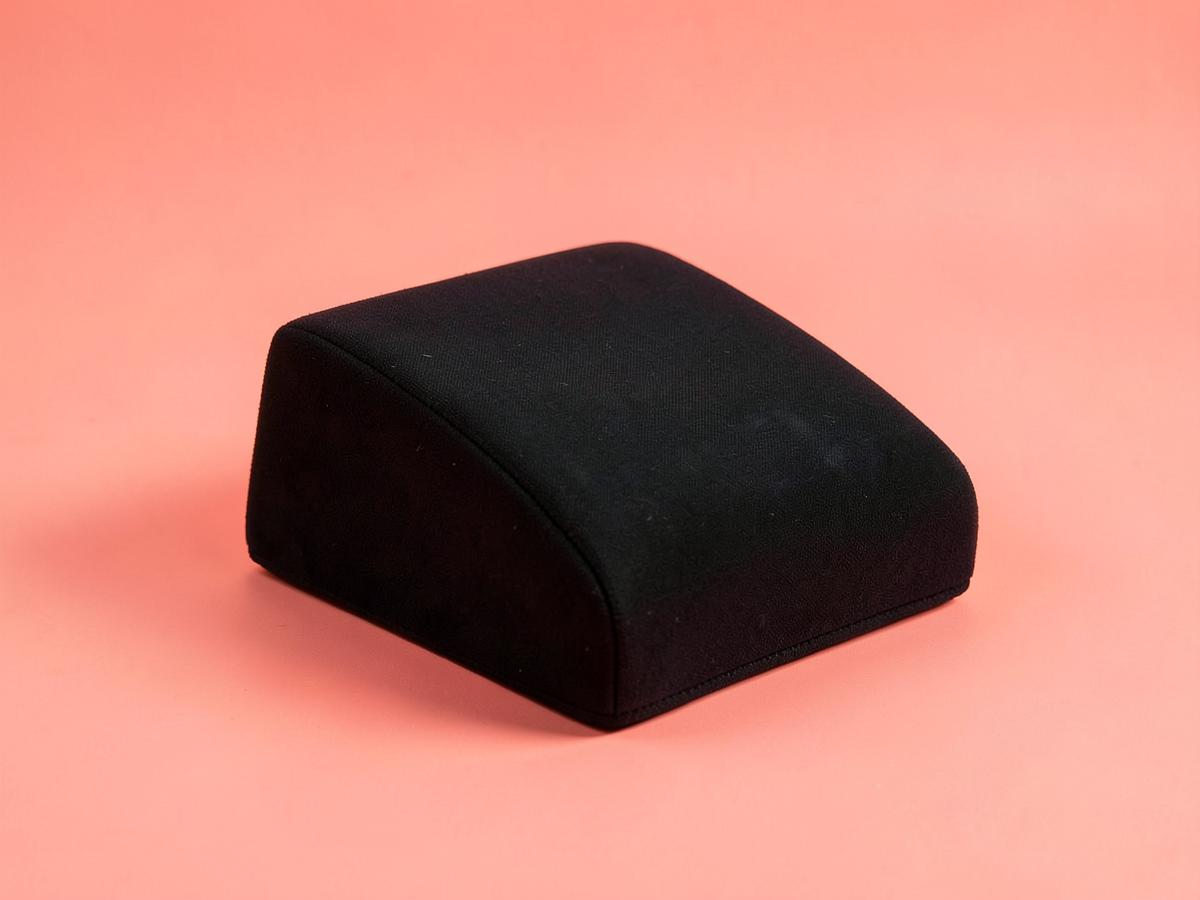
ComfiLife Foot Rest Under Desk

Short legs, tall desks, and feet that never quite reach the floor

The single most common ergonomic problem in home working is a desk built for somebody six feet tall being used by somebody who is not. Raise the chair so your arms are right and your feet dangle; keep your feet down and your shoulders end up round your ears. A footrest resolves the conflict for about twenty dollars. This one is dense memory foam with a washable cover and a shape that lets you rest flat or on a slope, and the difference in lower-back load after eight hours is not subtle. It is the first thing on this page to buy.

Type
Memory foam
Angles
Flat or sloped
Cover
Washable
Give up
Height adjustment

What's good

  • Fixes the desk-too-tall problem outright
  • Dense foam that does not squash flat
  • Removable, washable cover

What's not

  • Fixed height, no adjustment
  • Slides on hard floors without the grip base
Everlasting Comfort Lumbar Support Pillow
03Instead of a chair with lumbar adjustment

Everlasting Comfort Lumbar Support Pillow

Flat-backed chairs, dining chairs, and anyone who slumps by mid-afternoon

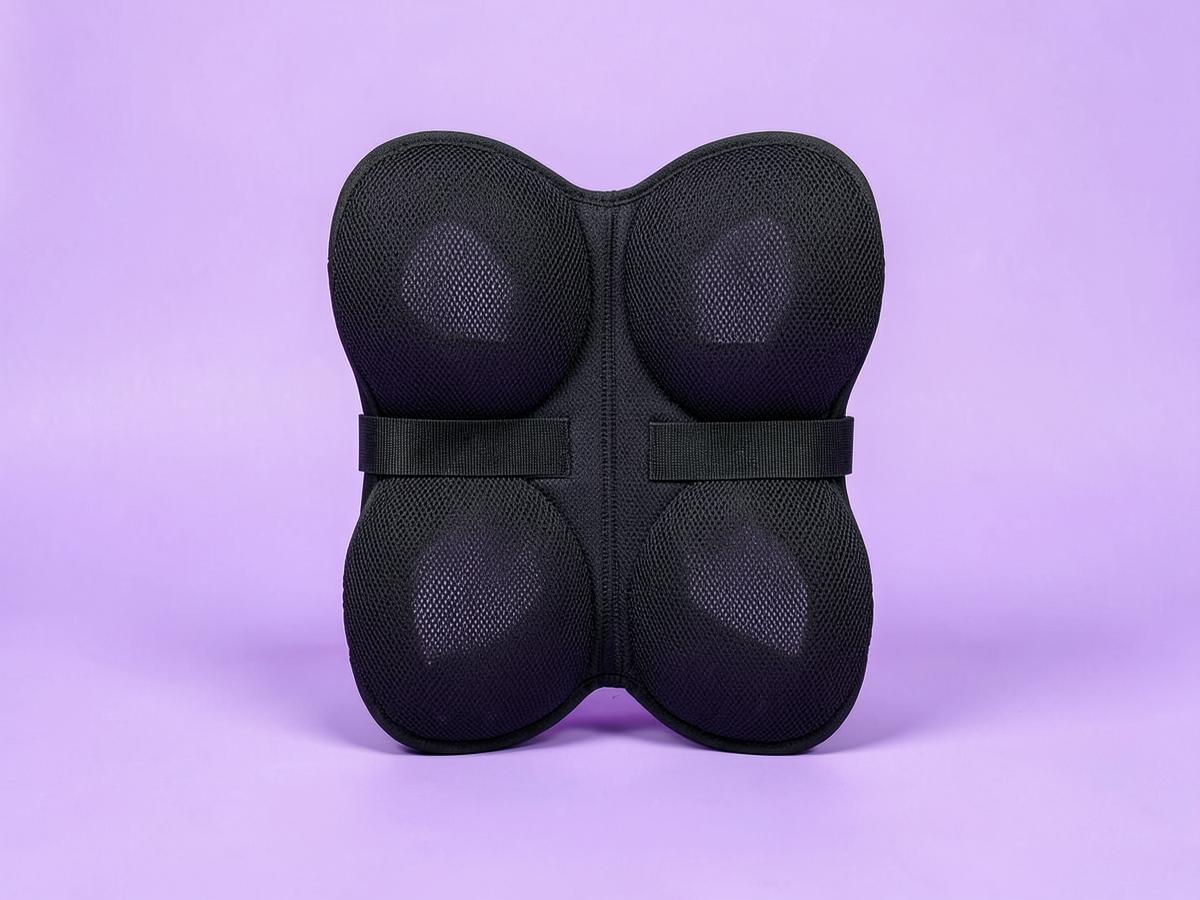
Adjustable lumbar support is the feature that separates a two-hundred-dollar chair from a thousand-dollar one, and this pillow buys you most of it for about thirty. It straps to the backrest so it does not slide out from behind you every time you stand up — the reason most cushions get abandoned — and the moulded shape fills the gap between a flat chair back and the natural curve of your spine. That gap is why you slump: with nothing to rest against, the lower back gradually gives up. Fill it and sitting upright stops being an act of will.

Fill
Memory foam
Fixing
Two straps
Fits
Most chair backs
Give up
Fine height tuning

What's good

  • Two straps keep it in position all day
  • Moulded shape rather than a flat cushion
  • Works on a dining chair or a car seat

What's not

  • Position is only roughly adjustable
  • Adds bulk to a small chair
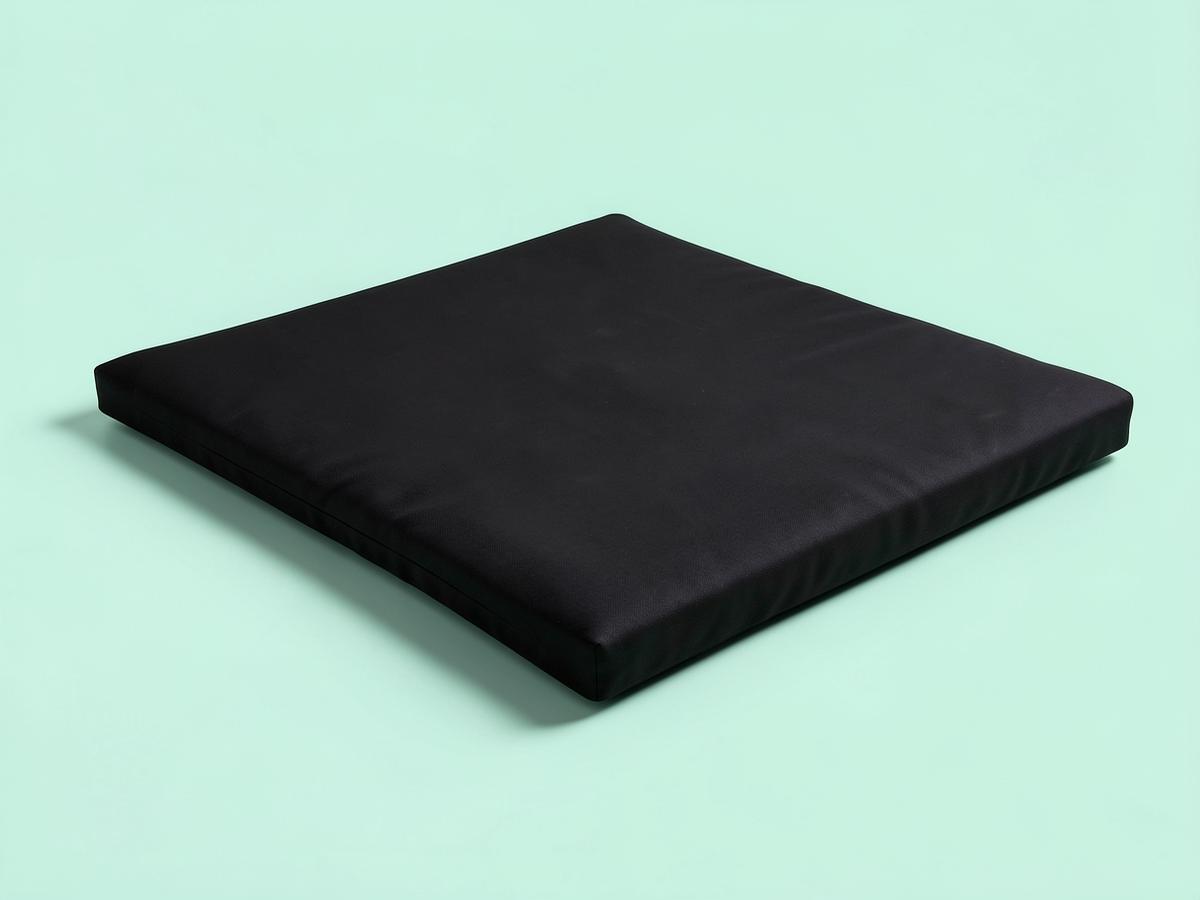
Everlasting Comfort Seat Cushion
04Instead of a moulded seat pan

Everlasting Comfort Seat Cushion

Hard seats, tailbone pain, and chairs whose padding gave up years ago

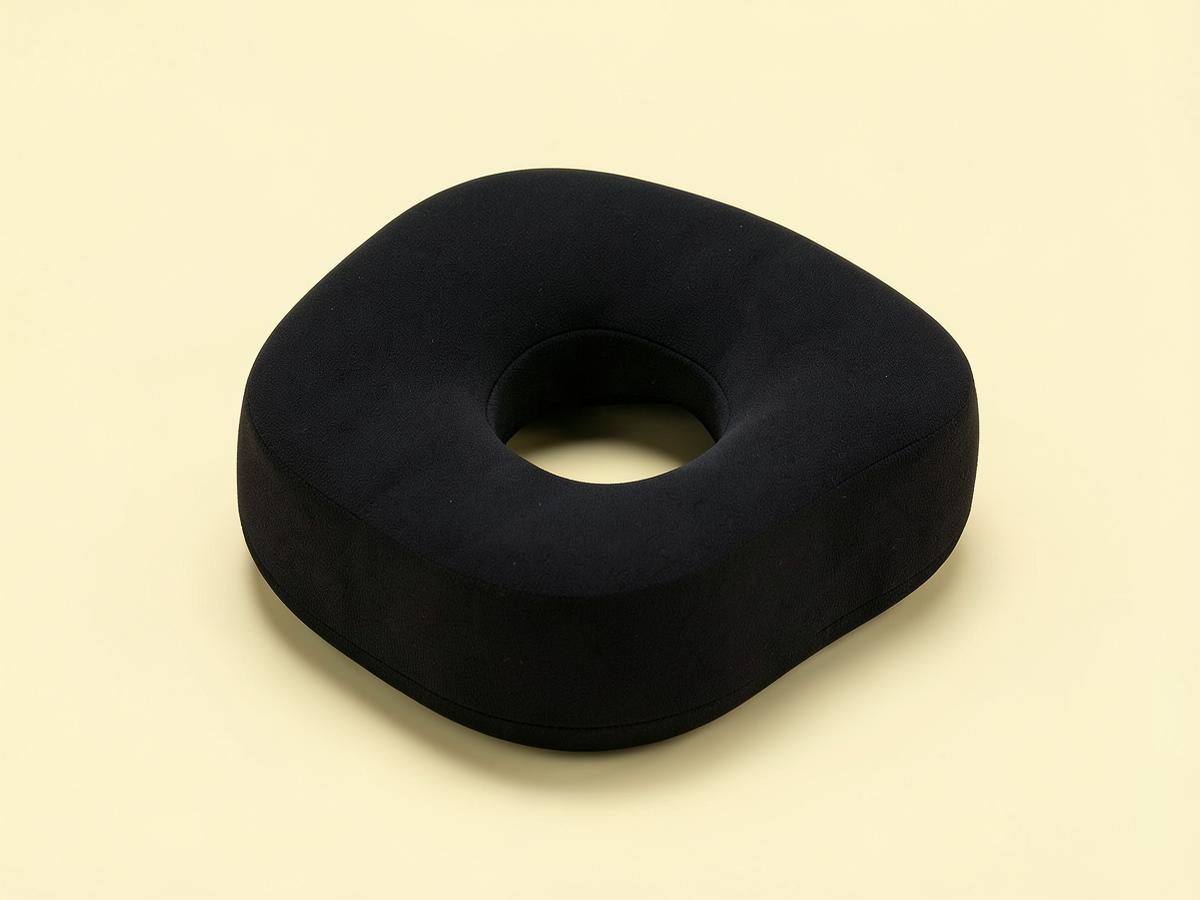
Expensive chairs shape the seat so your weight spreads across your thighs instead of concentrating under your sitting bones. Cheap chairs do not, and after a few years the foam compresses to something close to a plank. This cushion restores the shaping with a cut-out at the back that keeps pressure off the tailbone entirely, which is the specific complaint most people describe as pain rather than stiffness. It also raises you an inch or two, which is either a bonus or a problem depending on your desk height — check that before you buy, and pair it with the footrest if it lifts you too far.

Fill
Memory foam
Shape
Coccyx cut-out
Base
Non-slip
Give up
Some desk clearance

What's good

  • Cut-out genuinely relieves tailbone pressure
  • Revives a flattened old chair seat
  • Moves between desk chair, car and dining chair

What's not

  • Raises you an inch or two
  • Warm on a hot day
HUANUO Adjustable Foot Rest
05Instead of a footrest with a tilt mechanism

HUANUO Adjustable Foot Rest

People who fidget, and anyone whose ankles stiffen when held still

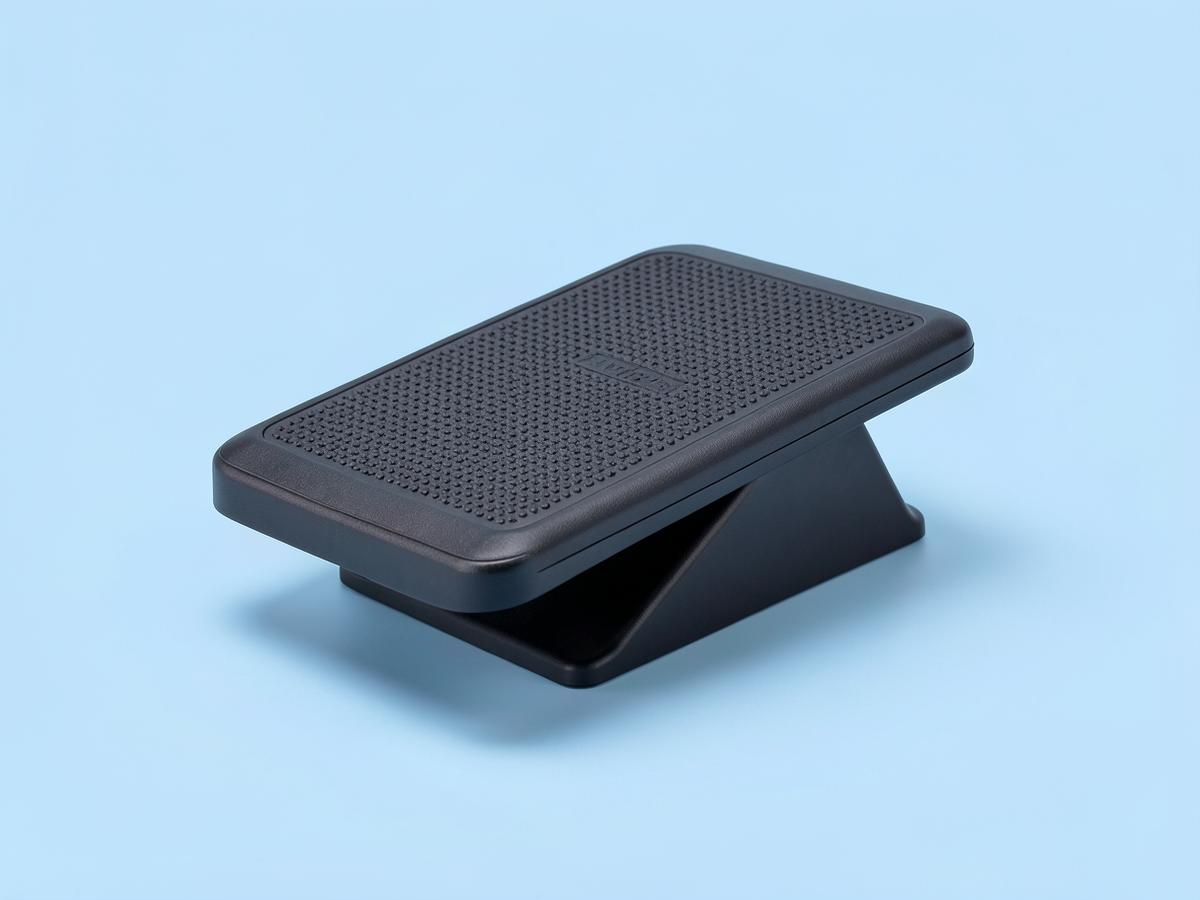
The upgrade over a foam block, for not very much more. This one tilts and sets to three heights, so you can rock it through the day rather than holding your ankles at one angle for eight hours — which matters, because circulation problems from sitting come from stillness rather than from position. The textured surface is sold as a massage feature, which is overstating it, but rolling your arches over it in the afternoon is genuinely pleasant. Buy this over the foam one if your desk height is unusual or you know you are a fidget.

Heights
Three
Motion
Tilt and rock
Surface
Textured
Give up
Foam softness

What's good

  • Three heights and a tilting platform
  • Rocking motion keeps ankles moving
  • Textured surface feels good on bare feet

What's not

  • Hard plastic, not padded
  • Bulkier under a shallow desk
FEATOL Anti Fatigue Mat
06Instead of a treadmill desk

FEATOL Anti Fatigue Mat

Long standing stints, and anyone who fidgets with their feet while thinking

A thicker, larger mat than the ComfiLife, aimed at people who stand for real stretches rather than twenty minutes at a time. The extra area matters more than it sounds — a small mat forces you to stand in one spot, and shifting your weight around is precisely what keeps standing comfortable. The foam is firm rather than plush, which sounds worse and is actually right; a mat you sink into makes your calves work harder, and calves are the thing that gives out first. If you have tried standing and lasted an hour, this is what to fix before you conclude standing is not for you.

Thickness
Extra thick
Size
Large
Feel
Firm
Give up
Floor space

What's good

  • Large enough to move around on
  • Firm foam that supports rather than swallows
  • Wipes clean easily

What's not

  • Takes up floor space permanently
  • Firmer than some people expect

Work out which problem you actually have

Sit at your desk normally for a minute and check three things. Are your feet flat on the floor with your knees at roughly a right angle? Is there a gap between your lower back and the chair? Are your forearms level with the desk surface with your shoulders relaxed? Whichever of those three is wrong is the one to spend money on, and it is usually only one.

Feet dangling means the chair is too high for you, which almost always means the desk is too high and you raised the chair to compensate. That is the footrest. Feet flat but shoulders hunched means the opposite: the desk is too low, and no cushion fixes that — you need to raise the desk or the monitor instead.

A gap behind your lower back means lumbar support. Pain concentrated right where you sit, rather than in the back, means the seat cushion. And pain that only appears when you stand to work means the floor, not the chair. Four symptoms, four different purchases, and buying the wrong one changes nothing.

What the expensive chairs actually buy you

It is worth being fair to the costly furniture. A serious task chair gives you a seat pan that slides forward and back for different leg lengths, lumbar support that adjusts up and down as well as in and out, armrests that move in four directions, and a tilt mechanism weighted to your body so you can recline without launching yourself. Those are real engineering, and a foam cushion does not reproduce them.

What it buys you above all is adjustability across a range of bodies. The swaps on this page are fixed: one thickness, one shape, one height. If you happen to be near the middle of the range they were designed for, the gap between a thirty-dollar cushion and a thousand-dollar chair is far smaller than the price difference suggests. If you are very tall, very short, or dealing with a diagnosed back condition, that gap widens quickly.

There is also a durability point. A good chair is designed for a decade of eight-hour days. Foam accessories compress and need replacing every couple of years. Over ten years the maths narrows — but very few people working from a spare room are planning ten years ahead, and a purchase you can actually make today beats a better one you never make.

The free adjustments to make first

Before buying anything, lower or raise your chair so your forearms are level with the desk and your shoulders are relaxed. That single adjustment is the foundation and everything else follows from it. Most people set chair height by leg comfort, which gets the arms wrong, and wrist and shoulder trouble follow within months.

Then push the chair in. Sitting a foot back from the desk and reaching forward is the fastest route to neck pain, and it costs nothing to correct. Put the monitor an arm's length away with the top of the screen at eye level, and put the mouse next to the keyboard rather than out past a number pad — the shoulder does not like reaching sideways all day.

Finally, get up every half hour. Not for long — a minute is fine. Every study on sitting comes back to the same finding: the duration of an unbroken sitting stretch matters more than the total, and no purchase on this page substitutes for standing up occasionally. It is free, and it beats everything you can buy.

When to stop swapping and buy the real thing

If you have tried the footrest and the lumbar support and still hurt at the end of every day, the accessories are not the answer and stacking more of them will not help. At that point the chair itself is wrong, and a mid-priced task chair with proper adjustment is worth saving for. You do not need the famous designer models; the sensible middle of the market has been good for years.

The other signal is time. If you are working from home for a fortnight, spend nothing. If this is your permanent job for the next five years, the maths changes completely, and spreading a real chair across sixty months of full-time use is unremarkable next to what an office would have spent on you.

And if pain wakes you at night, travels down a leg, or comes with numbness, stop shopping and see somebody. Those are not desk-setup symptoms and no cushion is going to touch them. Everything on this page is for ordinary end-of-day aching, which is common, unglamorous and genuinely improvable.

How we picked

  • Each swap tested against the expensive product it replaces
  • Judged over full working days, not first impressions
  • Foam density checked after several weeks of daily use
  • Straps and covers tested on a dining chair as well as an office chair
  • Nothing here costs more than a fraction of a real ergonomic chair
  • We say plainly what you give up, not just what you save

Questions we get

Which one should I buy first?

The footrest, if your feet do not sit flat on the floor. It is the most common problem, the cheapest fix, and the one people notice within a day.

Can these replace a proper ergonomic chair?

Not entirely. They fix specific problems that a good chair fixes as part of a whole. If you are working full time for years, save for the chair. Meanwhile, these help now.

Will a seat cushion make my desk too high?

It can. A cushion raises you an inch or two, so check your forearm height afterwards. If it puts your arms below the desk, add the footrest and raise the chair to match.

How long does the foam last?

Expect a couple of years of daily use before it flattens noticeably. Denser foam lasts longer, which is worth the few extra dollars over the cheapest listings.

Do anti-fatigue mats really do anything?

Yes, and it is the clearest effect on this page. Standing on a hard floor concentrates pressure through the heels; a cushioned mat spreads it and lets you shift about. Most people who quit standing quit because of their feet.

Before you buy

Buy one thing, not six. The temptation with cheap fixes is to order the lot and hope something works, and what actually happens is you cannot tell which one helped and you have three unused foam blocks under the desk.

Pick the swap that matches the problem you identified at the top, use it for two weeks, then reassess. If your evenings feel different, buy the next one. That is a far better use of a hundred dollars than a single panic purchase.

Keep reading

As an Amazon Associate we earn from qualifying purchases. Product availability and prices on Amazon change frequently and anything shown here may be out of date by the time you click. How we pick our recommendations.