
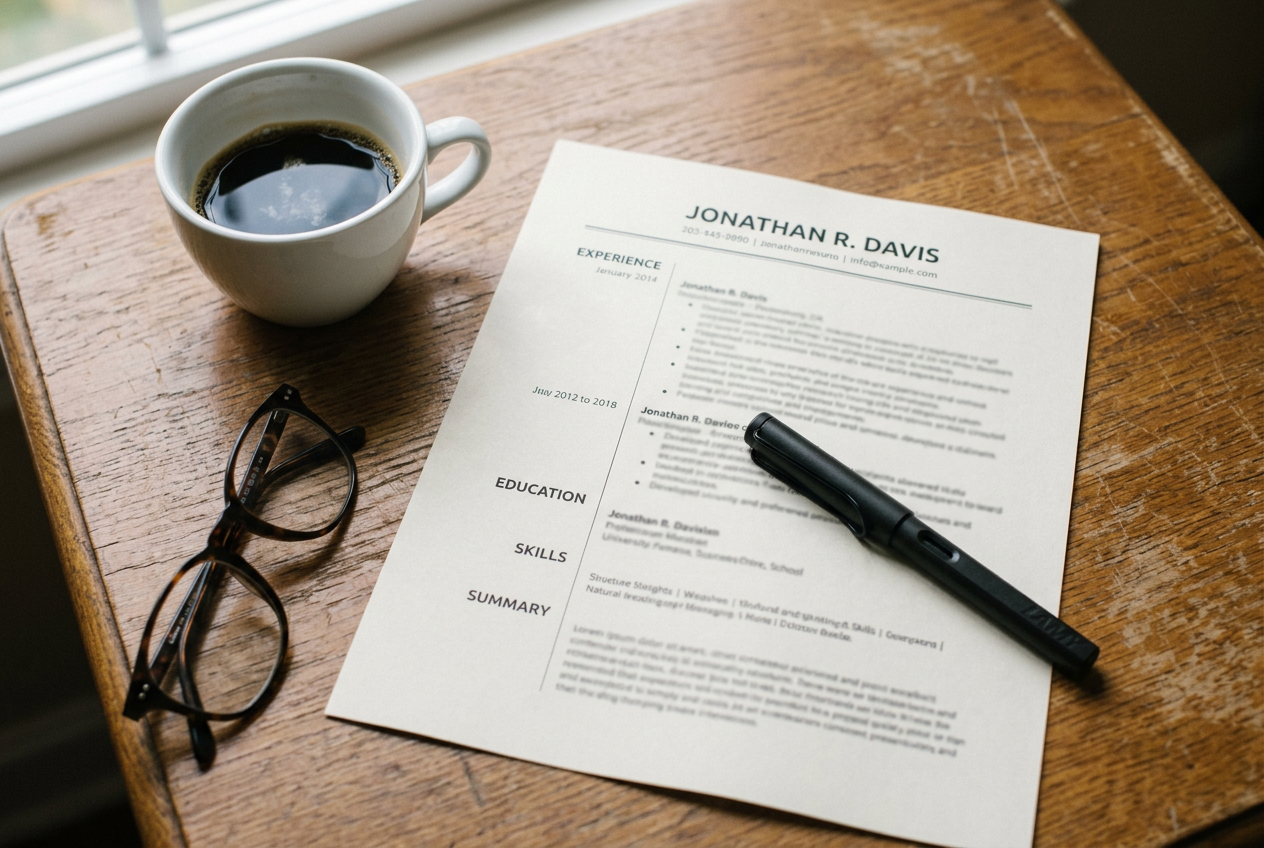
The one-page rule is a myth that was outdated fifteen years ago and is actively hurting mid-career candidates today. But two pages of filler will sink you just as fast.
We polled 41 active recruiters across healthcare, tech, and hospitality this quarter. Here is what they actually want.
The short answer
- 0–3 years of experience: one page.
- 3–10 years: one page if it is tight, two if you have earned it.
- 10+ years: two pages, no apologies.
- Executive / senior clinical: two pages of accomplishments, plus a separate one-page leadership addendum if you have peer-reviewed publications, board work, or major program launches.
Recruiters overwhelmingly said they would rather read two dense, relevant pages than one padded page.
When a second page is the right call
From the interviews, five triggers made every recruiter say "give me two pages":
- Three or more employers with substantive tenure. Cramming eight years at four employers onto one page erases what the recruiter came to read.
- Quantified results in every role. If you have numbers, they are your entire case. Do not sacrifice them for whitespace.
- Licensure, certifications, and continuing education worth listing. Nurses, engineers, PMs, and finance professionals all fall here.
- A career pivot that needs a "relevant experience" section AND an "additional experience" section. See our career change resume guide.
- A leadership scope that cannot be summarized in bullets. Team size, budget owned, cross-functional partners.
When a second page is actively hurting you
Equal and opposite: five patterns that make recruiters cut you at page one:
- A "Skills" block that fills a quarter of a page. Skills go in a tight sidebar or footer, not the whole margin.
- Six-line paragraphs describing a job. Nobody reads them.
- High school anything, if you have a bachelor's degree.
- "References available on request." Delete this line today.
- A career objective at the top. Delete this too. Use a three-sentence positioning summary if you use anything.
Get new remote remote jobs sent to your inbox.
We check the employer career pages in this article every day and email you the new openings — with the real apply link, not a repost. 4,994 live right now.
Free. Unsubscribe any time.
The layout that gets read
Across specialties, the recruiter-preferred layout looked identical:
- Three-line header (name, contact row, city — centered)
- Three-sentence positioning summary
- Experience with reverse-chronological, dense bullets (4–6 per role), verb-first, quantified
- Skills (tight, one line or a compact block)
- Education, certifications, licenses (dense, no filler)
That is it. If you have publications, awards, or volunteer work relevant to the role, they go last.
If you want us to compress a padded resume into this exact layout, the Resume Rewriter does it in about 30 seconds — and it keeps every license number, certification, and quantified result intact.